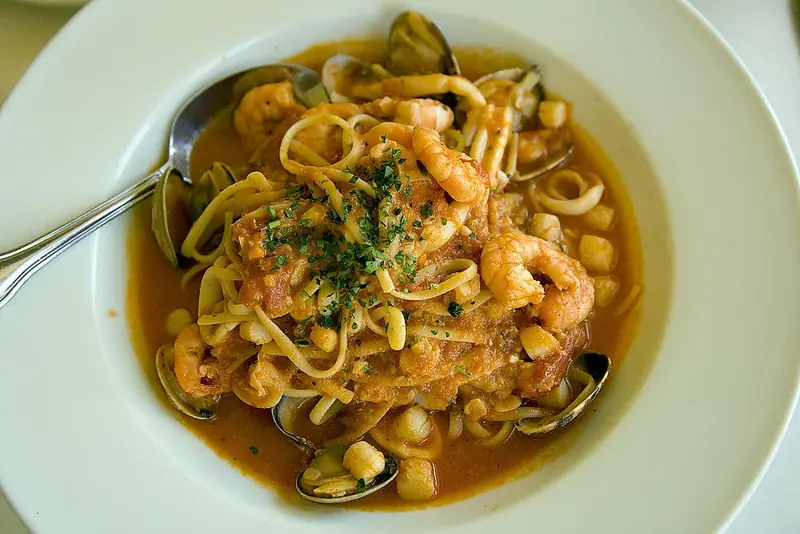
Seafood Linguine
Shrimp and mussels simmered with white wine, garlic, and chili, then tossed with linguine and lemon.
Updated: Nov 9, 2026
Why you'll like it
- Ready in about 35 min.
- Serves 2 — easy to halve or double.
- Medium level — everyday equipment only.
- Storage, freezing and reheating covered below.
This Seafood Linguine recipe takes 35 min and makes 2 servings. The shrimp and the mussels or clams cook in the same skillet the garlic and chili started in, so the pasta picks up the wine, tomato, and pepper flavors built in that pan.
Helpful guides
Instructions
Bring a large pot of well-salted water to a boil and cook the linguine 1 minute short of the package time. Salting the water seasons the pasta from the inside, and stopping early leaves room for it to finish in the sauce.
While the water heats, scrub the mussel shells with a stiff brush, pull off the beards, and tap any open shells; discard the ones that do not close, along with any that are cracked. Pat the shrimp dry so they sear instead of steaming in the pan.
Heat the olive oil in a wide skillet over medium heat, add the garlic and red pepper flakes, and cook 1 minute until fragrant but not browned. Add the shrimp in a single layer and cook 1 to 2 minutes per side, until pink and opaque at 145 degrees F, then move them to a plate.
Pour the wine into the skillet and boil 1 minute, scraping the pan, then add the tomatoes and the mussels, cover, and cook 4 to 6 minutes, shaking the pan once or twice. The shells should open as the wine steams; throw away any that stay closed after 6 minutes.
Drain the pasta, keeping 1/2 cup of the cooking water, and add the linguine to the skillet with a splash of that water. Toss over medium heat for 1 minute so the starch and wine emulsify into a sauce that coats the strands.
Return the shrimp and their juices to the pan with the lemon zest, lemon juice, and parsley, and toss once. Taste for salt, since the shellfish and pasta water both carry some, and serve in warm bowls straight away.
Troubleshooting — fixes, not repeats
- If the shrimp turn rubbery, they cooked past opaque. Sear them 1 to 2 minutes per side, pull them at 145 degrees F, and let the hot pasta and sauce finish warming them at the end.
- If the sauce looks watery, too much pasta water went in or the pan was crowded. Add the water a splash at a time and toss hard over medium heat so the starch and fat come together.
- If the mussels do not open, the pan was not hot enough or they were held too long. Use a wide pan with a tight lid over medium-high heat and discard any shell that is still shut.
- If the garlic scorches, the oil was too hot for the sliced cloves. Cook the garlic gently for 1 minute before the shrimp go in.
Make it your way
- Old Dhaka style: A tablespoon of cold butter whisked in at the end makes the sauce rounder.
- A pinch of saffron steeped in the wine gives the sauce a deeper color and a faint honey note.
- For a tomato-forward version, stir 1 cup of crushed tomatoes into the pan with the wine and simmer 5 minutes before the shellfish go in.
- Swap the linguine for spaghetti or bucatini, or use 12 ounces of fresh pasta and cut the boil to 2 minutes.
Storage & reheating
Cool leftovers within 2 hours, then refrigerate in a covered container and use within 3 to 4 days. Reheat only the portion you will eat until steaming hot throughout — poultry and reheated rice should reach 165°F (74°C).
Reheat in a covered skillet over medium-low heat with a splash of water or broth until steaming and 165 degrees F.
Do not reheat shellfish more than once, and do not freeze this dish.
FAQ
Do I have to use mussels?
No. Small clams work the same way and open in about the same time, and 8 more ounces of shrimp or a handful of bay scallops can replace the shellfish entirely. Without shells the dish loses some brininess, so add an extra splash of pasta water and a pinch more salt.
Can I make seafood linguine ahead?
Cook the sauce base of garlic, chili, wine, and tomatoes up to a day ahead and refrigerate it. Boil the pasta and cook the shellfish just before serving, because shrimp and mussels firm up and the pasta soaks up the sauce on standing.
How do I keep the pasta from sticking together?
Stir the linguine for the first minute in the boiling water and keep the pot at a rolling boil. Skip the oil in the water, and toss the drained pasta with sauce right away instead of letting it sit in a colander.