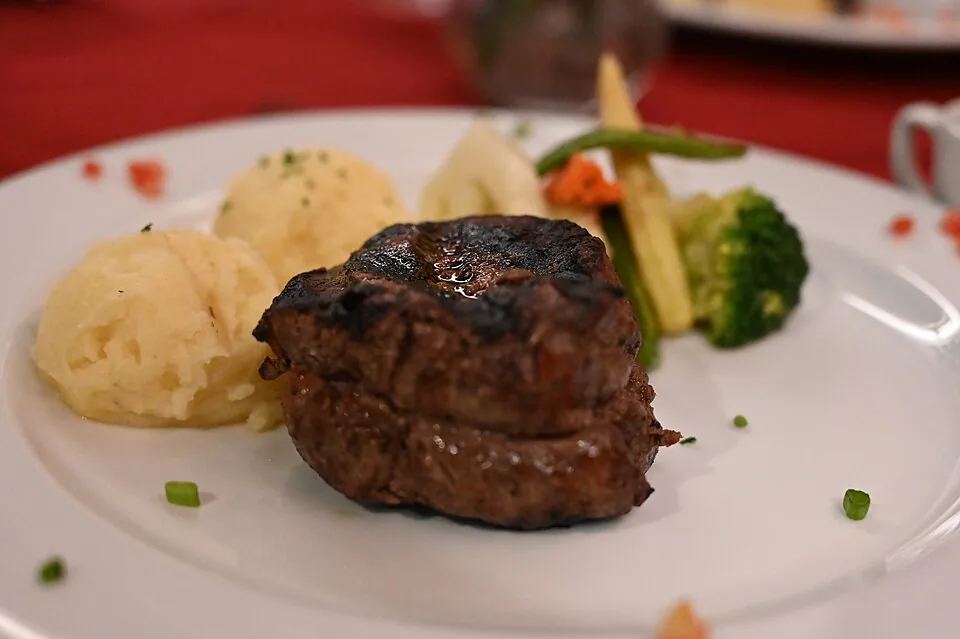
Filet Mignon Dinner
Thick seared filet mignon with garlic-herb butter, roasted potatoes, and green beans for two.
Updated: Oct 6, 2026
Why you'll like it
- Ready in about 50 minutes.
- Serves 2 — easy to halve or double.
- Medium level — everyday equipment only.
- Storage, freezing and reheating covered below.
This Filet Mignon Dinner recipe takes 50 minutes and makes 2 servings. Filet mignon dinner is a classic Valentine's Day choice for couples cooking at home across the United States.
Helpful guides
Instructions
Set the steaks on a plate at room temperature for 30 minutes and pat very dry with paper towels. Season all sides generously with the salt and pepper. Heat the oven to 400 degrees and toss the potatoes with 1 tablespoon oil and half the salt on a sheet pan.
Roast the potatoes cut side down for 25 to 30 minutes until crisp and golden, turning once halfway through cooking. Start the steaks while the potatoes roast so both finish together. Dry surfaces and a hot oven give the crispiest potato edges.
Heat the oil in an oven-safe skillet over medium-high heat until just smoking. Sear the filets 3 minutes per side without moving them, pressing lightly once for full contact. Deep brown crusts should form on both faces before the pan enters the oven.
Add the butter, garlic, and herbs to the skillet and tilt the pan to spoon foaming butter over the steaks for 1 minute. Transfer the skillet to the oven beside the potatoes and roast 5 to 8 minutes until a thermometer reads 145 degrees in the center.
Move the steaks to a warm plate, spoon herb butter over the tops, and rest 10 minutes so juices redistribute through the meat. Steam the green beans 4 minutes until bright and crisp-tender while the steaks rest. Do not slice early, or juices will flood the board.
Plate each filet with roasted potatoes and green beans, drizzling pan butter over the vegetables. Serve immediately with red wine and bread. Refrigerate leftovers within 2 hours and reheat gently to steaming and 165 degrees.
Each serving has about 690 kilocalories.
Troubleshooting — fixes, not repeats
- If steaks steam instead of searing, the pan was crowded or the meat was damp; use a wide skillet at full heat and pat the surfaces completely dry.
- If the center overshoots 145 degrees, the oven stay ran long or the thermometer lagged; start checking 2 minutes early and pull promptly at temperature.
- If potatoes stick to the pan, the cut sides needed more oil or the pan was cool; preheat the sheet and coat cut faces generously before roasting.
- If green beans turn dull, they steamed too long or sat covered; cook just until bright and serve at once for crisp color.
Make it your way
- For a peppercorn version, press 2 tablespoons of cracked peppercorns onto the steaks before searing and finish with a splash of cream in the pan.
- Swap potatoes for parmesan risotto or garlic mashed potatoes using the same herb butter.
- Add sauteed mushrooms with the garlic for an earthier plate.
Storage & reheating
Cool leftovers within 2 hours, then refrigerate in a covered container and use within 3 to 4 days. Reheat only the portion you will eat until steaming hot throughout — poultry and reheated rice should reach 165°F (74°C).
Reheat steak gently in a 250 degree oven to steaming and 165 degrees, avoiding the microwave, which toughens tenderloin.
FAQ
What temperature should filet mignon reach?
Cook to 145 degrees Fahrenheit in the thickest part for medium, verified with an instant-read thermometer. Rest 10 minutes before slicing so juices settle. Thinner steaks need earlier checks since they climb quickly in a hot oven.
How thick should the steaks be?
Choose filets at least 1.5 inches thick so the crust browns deeply before the center overcooks. Thinner cuts go from seared to overdone in minutes. Even thickness across both steaks keeps timing matched for two servings.
Can I cook this without an oven-safe skillet?
Yes. Sear in any heavy skillet, then transfer the steaks to a small baking pan with the butter, garlic, and herbs for the oven finish. Baste once before roasting. Cast iron holds heat best, but any heavy pan works with adjusted timing.