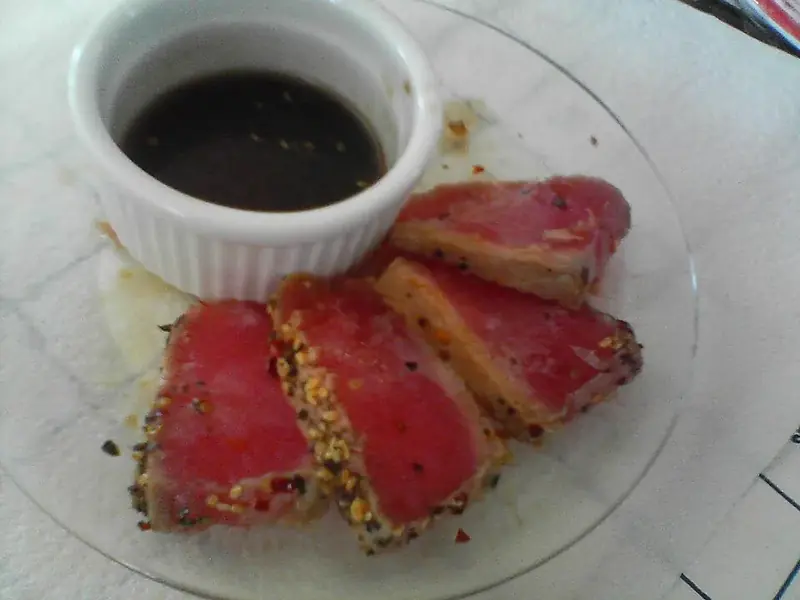
Seared Tuna Steak
Sesame-crusted ahi tuna seared briefly and sliced to show a rare center, with a quick dipping sauce.
Updated: Nov 9, 2026
Why you'll like it
- Ready in about 20 min.
- Serves 4 — easy to halve or double.
- Medium level — everyday equipment only.
- Fits a busy weeknight.
- Storage, freezing and reheating covered below.
This Seared Tuna Steak recipe takes 20 minutes and makes 4 servings. Seared ahi is a thick tuna steak cooked hard and fast on both sides so the outside carries a sesame crust while the center stays rare, then sliced thin and served with a dipping sauce.
Helpful guides
Instructions
Pat the tuna steaks dry and season both sides with salt and pepper, then press the sesame seeds onto the surfaces. Dry fish takes the crust, and pressing the seeds in helps them stay put through the flip.
Whisk the soy sauce, sesame oil, and 1 tablespoon water in a small bowl for the dipping sauce and set it aside. Mixing it first means the fish can go straight from pan to plate without waiting.
Heat the vegetable oil in a heavy skillet over high heat until it shimmers and just begins to smoke. Tuna sears in a narrow window, and a lukewarm pan cooks the outside through before the center is set.
Lay the steaks in the pan with space between them and cook 1 to 1.5 minutes per side for rare, or 2 to 2.5 minutes per side for medium. Hold the edges against the pan with tongs for a few seconds each so the sides sear too.
Check the center with an instant-read thermometer: about 125 degrees F for rare and 145 degrees F for medium. Federal guidance recommends 145 degrees F for fish, so treat a rare center as a personal choice made only with sushi-grade tuna from a supplier you trust.
Rest the steaks 3 to 5 minutes on a cutting board, then slice across the grain into 1/4-inch strips. Resting lets the juices settle so they stay in the fish instead of running onto the board.
Fan the slices onto plates, scatter the scallions, and serve with the dipping sauce. Refrigerate leftovers within 2 hours and eat them cold, since reheated tuna turns dry and chalky.
Troubleshooting — fixes, not repeats
- If the sesame crust falls off, press the seeds in firmly and let the fish sit 5 minutes before it goes into the pan.
- If the center is grey all the way through, the pan was not hot enough or the steak was thin; use 1-inch steaks and high heat.
- If the fish smells strong or looks dull, it is not fresh; buy from a supplier you trust and keep it refrigerated until cooking.
- For a darker crust, leave the steaks uncovered in the refrigerator 20 minutes before searing so the surface dries.
Make it your way
- Serving with rice or naan: The same method works for swordfish or mahi mahi, but those steaks should be cooked to 145 degrees F throughout rather than served rare.
- For a peppered crust, replace the sesame seeds with 2 tablespoons cracked black pepper and sear the same way.
- A soy and ginger marinade made from 2 tablespoons soy sauce, 1 teaspoon grated ginger, and 1 teaspoon honey can coat the steaks for 20 minutes before searing, though pat them dry so the crust still forms.
- Wasabi mayonnaise or a ponzu dip can replace the sesame sauce.
Storage & reheating
Cool leftovers within 2 hours, then refrigerate in a covered container and use within 3 to 4 days. Reheat only the portion you will eat until steaming hot throughout — poultry and reheated rice should reach 165°F (74°C).
Serve leftover seared tuna cold in salads or sandwiches, because reheating dries the fish out; if you do reheat it, use a low oven just to 165 degrees F.
Seafood does not freeze well after cooking because the texture turns rubbery and watery, so freeze raw tuna instead and sear it fresh.
FAQ
Is rare tuna safe to eat?
Federal guidance recommends cooking fish to 145 degrees F. Tuna served rare is a choice some cooks make with sushi-grade fish from a supplier they trust; if you want certainty, cook the steaks to 145 degrees F for a medium center.
How do I know I am buying good tuna?
Look for firm, glossy flesh with a clean smell and no brown or dull patches, and ask the counter when it arrived. Sushi-grade is not a regulated grade in the United States, so the supplier matters more than the label.
Can I cook tuna straight from frozen?
Thaw it overnight in the refrigerator first, then pat it dry. Cooking from frozen prevents the sesame crust from forming and makes the center cook unevenly against the seared outside.