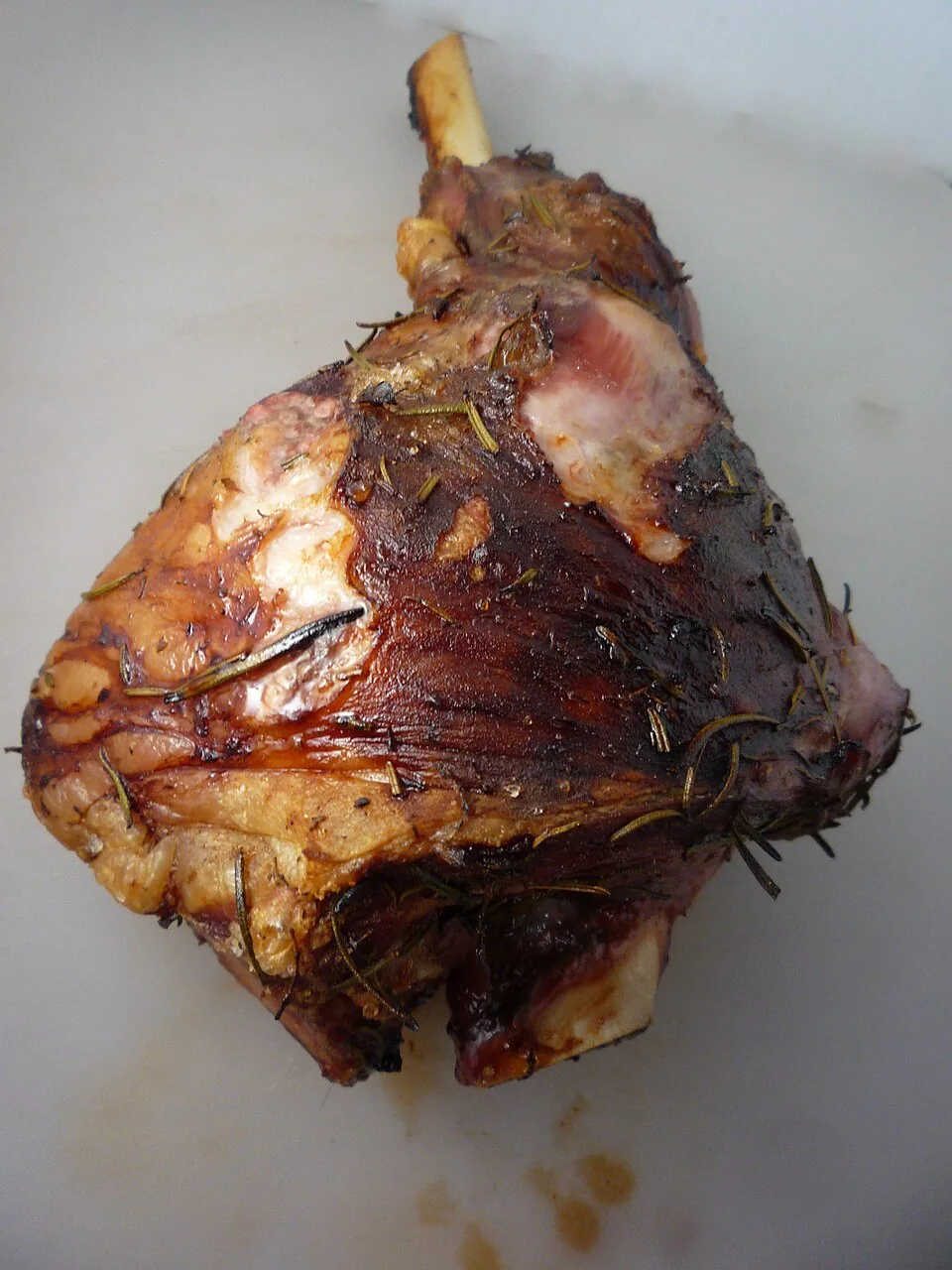
Roast Leg of Lamb
Garlic-rosemary roast leg of lamb with pan juices, rested and carved for Easter dinner tables.
Updated: Oct 6, 2026
Why you'll like it
- Ready in about 2 hr 30 min.
- Serves 8 — easy to halve or double.
- Medium level — everyday equipment only.
- Stays juicy when cooked to 165°F (74°C).
- Storage, freezing and reheating covered below.
Roast leg of lamb anchors Easter dinner across the USA, with garlic and rosemary perfuming the meat while the oven builds a browned crust. This version rubs a bone-in leg with olive oil, Dijon, lemon, salt, and pepper, studs it with garlic slices, and roasts at 325 degrees over a broth-filled pan that catches savory drippings.
Helpful guides
Instructions
Set the lamb on the counter 45 to 60 minutes before roasting so the chill eases off for even cooking. Pat the surface very dry with paper towels; do not wash or rinse the meat, since washing spreads bacteria without removing germs. Tie loose sections with twine for even shape.
Heat the oven to 325 degrees and set a rack inside a roasting pan. Cut small slits across the leg and press garlic slices into half of them. Stir the oil, mustard, lemon juice, rosemary, salt, and pepper into a paste, then rub it over every side of the lamb.
Pour the broth into the roasting pan under the rack to catch drippings and keep them from scorching. Set the lamb fat-side up on the rack so basting juices run down through the meat. Slide the pan onto the middle rack with space above for hot air to circulate.
Roast about 20 minutes per pound, roughly 1 hour 25 to 1 hour 40 minutes for a 4 to 5 pound leg. Start checking with an instant-read thermometer in the thickest muscle after 1 hour 15 minutes, away from bone. Steady moderate heat browns the crust without charring the garlic.
Pull the lamb when the thermometer reads 140 to 145 degrees in the thickest part for a blushing medium finish after resting. Carryover heat raises the temperature several degrees off the heat. Do not carve yet; cutting early spills the juices that resting redistributes through the meat.
Transfer the leg to a cutting board, tent loosely with foil, and rest 15 to 20 minutes until the internal temperature holds at least 145 degrees. Resting relaxes the muscle fibers so slices stay juicy instead of weeping. Warm a platter and pour any board juices into the pan drippings.
Carve thin slices across the grain, working around the bone and turning the leg as needed for a good angle. Spoon the warm pan juices over the platter and serve with roasted potatoes and spring vegetables. Confirm any reheated servings reach 165 degrees before bringing them to the table.
Troubleshooting — fixes, not repeats
- If the center turns gray and dry, the roast cooked past temperature. Trust the thermometer, start checks at 1 hour 15 minutes, and pull at 140 to 145 degrees before the rest. Ovens vary, so minutes-per-pound only estimates.
- If slices taste tough despite good color, the meat skipped resting or met the knife with the grain. Rest tented a full 15 minutes and carve thinly across the visible muscle lines. Thick slices cut parallel to the fibers chew stringy.
- If the crust stays pale and soft, the surface went in damp or the pan crowded the heat. Pat the leg dry, rub the paste evenly, and roast uncovered. For deeper browning, finish 10 minutes at 425 degrees while watching the garlic.
- If the oven smokes, drippings are scorching on a dry pan. Keep broth under the rack and add hot water if it bakes dry. Trim only hanging fat flaps while leaving the cap intact, since the melting cap bastes the roast.
Make it your way
- Spicier version: For a butterflied leg, remove the bone, marinate 4 hours in the same paste, and grill over indirect heat to 145 degrees with rest.
- Mediterranean-style, add oregano and 4 minced anchovies to the rub.
- Serve leftovers in pita with tzatziki, or dice them into shepherds pie with peas.
- A mint gremolata of chopped mint, lemon zest, and garlic spooned over slices adds fresh contrast.
Storage & reheating
Cool leftovers within 2 hours, then refrigerate in a covered container and use within 3 to 4 days. Reheat only the portion you will eat until steaming hot throughout — poultry and reheated rice should reach 165°F (74°C).
Reheat with a splash of broth until steaming throughout, at least 165 degrees.
Freeze portions up to 3 months; thaw overnight in the refrigerator.
FAQ
What internal temperature is safe for lamb?
Cook whole cuts like leg of lamb to 145 degrees, then rest at least 3 minutes; this recipe rests 15 to 20 minutes. A blushing pink center at 145 degrees is safe. Ground lamb needs 160 degrees, and reheated servings should reach 165 degrees throughout.
Should I choose bone-in or boneless leg?
Bone-in legs roast evenly and stay juicier, but they need more oven time. Boneless legs cook faster and slice neatly but must be tied tightly for even shape. Both reach the same 145-degree target; start checking boneless roasts about 20 minutes earlier.
How do I carve a leg of lamb?
Rest the roast first, then steady it with a carving fork and cut thin slices across the grain. Work along one side down to the bone. Cut only what guests need and save the board juices for spooning over the warm platter.