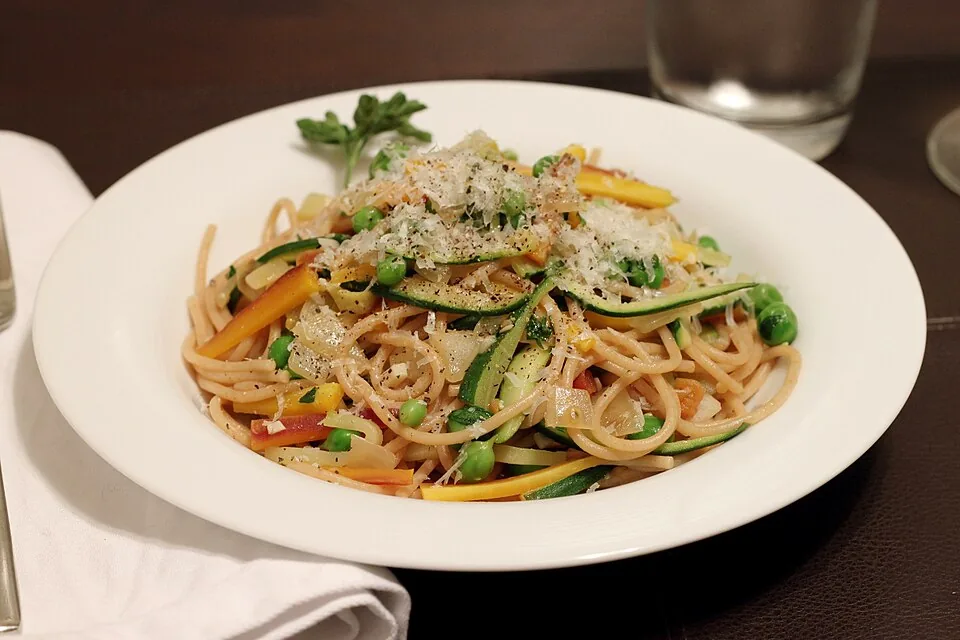
Easy Pasta Primavera
Penne with crisp-tender zucchini, peppers, peas, and Parmesan-lemon butter for fresh Italian-style suppers.
Updated: Oct 6, 2026
Why you'll like it
- Ready in about 30 min.
- Serves 4 — easy to halve or double.
- Easy level — everyday equipment only.
- Storage, freezing and reheating covered below.
Ready in 30 min, this easy Pasta Primavera serves 4. Pasta primavera is a bright Italian-style supper across the USA, tossing spring vegetables with hot pasta in a light Parmesan-lemon butter rather than heavy sauce.
Helpful guides
Instructions
Bring a large pot of water to a rolling boil and salt it until it tastes seasoned. Cook the penne 1 minute less than the package directs for firm texture. Before draining, scoop out 1 cup of the starchy cooking water, which turns butter and cheese into a clinging sauce.
Warm the olive oil in a large deep skillet over medium-high heat until shimmering. Add the zucchini and bell pepper with a pinch of salt and cook 4 to 5 minutes, turning once, until edges brown lightly but centers stay crisp. Browning builds sweetness that pale steamed vegetables never develop.
Stir in the peas, tomatoes, and garlic and cook 2 minutes more until the tomatoes slump slightly and the garlic smells fragrant. Do not let the garlic darken past gold, since browned garlic turns bitter across the whole skillet. Keep everything moving so nothing scorches.
Lower the heat to medium, add the butter, lemon zest, and 1 tablespoon lemon juice with 0.5 cup of the reserved pasta water. Swirl until the butter melts into a lightly thickened glaze that coats the vegetables. Starchy water emulsifies the fat into sauce instead of letting it pool greasily.
Add the drained penne and half the Parmesan, tossing 1 to 2 minutes until every tube turns glossy and coated. Loosen with more pasta water a spoonful at a time if the mixture looks dry. The pasta finishes cooking in the sauce while absorbing the lemon-butter flavor directly.
Taste for salt, pepper, and lemon, then divide among warm bowls with the remaining Parmesan and torn basil. Serve promptly while the coating shines, since the sauce tightens as it stands. A final drizzle of olive oil adds richness for guests wanting a fuller bowl.
Troubleshooting — fixes, not repeats
- If the vegetables turn soggy, the pan was crowded or the heat ran low. Sear in a single layer over true medium-high heat, working in two batches. Wet or thawed vegetables also steam, so pat them dry and let the oil shimmer before anything touches the pan.
- If the dish tastes bland, the pasta water went unsalted or the lemon stayed in the fridge. Salt the water until seasoned, use the full zest plus juice, and finish with Parmesan and black pepper. Starchy, salty water seasons from within.
- If butter pools instead of coating, the pan ran too hot or the cheese clumped. Lower the heat before adding dairy, toss with starchy water already in the pan, and add Parmesan off direct heat. Grated fresh cheese melts smoother than pre-shredded, which carries anti-caking starch.
- If the penne turns mushy, it overcooked before meeting the sauce. Boil 1 minute under the package time, since the pasta keeps cooking during the 2-minute toss. Drain promptly, keep the reserved water handy, and move fast once the vegetables finish so nothing waits and softens.
Make it your way
- For a creamy version, stir 0.5 cup of heavy cream into the skillet with the butter and simmer 1 minute before tossing.
- Add sliced grilled chicken or sauteed shrimp with the pasta for a heartier main dish.
- Use olive oil and 3 tablespoons of nutritional yeast instead of butter and Parmesan for a dairy-free bowl.
Storage & reheating
Cool leftovers within 2 hours, then refrigerate in a covered container and use within 3 to 4 days. Reheat only the portion you will eat until steaming hot throughout — poultry and reheated rice should reach 165°F (74°C).
Reheat in a skillet over medium-low heat with a splash of water, tossing until steaming throughout, at least 165 degrees.
Do not freeze; thawed vegetables turn mushy and the butter sauce separates.
FAQ
Which pasta shape works best?
Short tubes and twists like penne, farfalle, and fusilli catch vegetables and sauce in every bite. Long strands like spaghetti tangle awkwardly with chunky pieces. Boil it 1 minute under package time in well-salted water and finish it in the skillet so it absorbs flavor.
Can I use frozen mixed vegetables?
Yes. Thaw 4 cups of a zucchini, pepper, and pea-style blend, pat very dry, and saute over high heat in two batches. Expect slightly softer texture than fresh with the same bright color. Skip the extra peas in the ingredient list and season boldly, since frozen blends taste milder.
Can I make pasta primavera ahead?
It serves best fresh, but you can cut the vegetables and grate the cheese a day ahead and refrigerate separately. Cook the pasta and sauce just before serving, since reheated primavera softens and the glossy coating dulls. If you must reheat, use a skillet with added water.