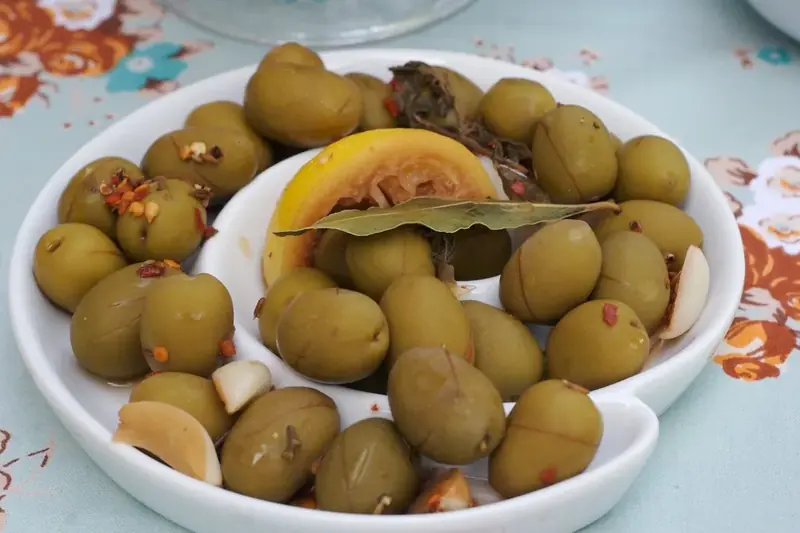
Easy Marinated Olives
Green olives marinated in olive oil with garlic, lemon peel, chili flakes, and bay leaf for a no-cook party snack.
Updated: Nov 9, 2026
Why you'll like it
- Ready in about 10 min.
- Serves 8 — easy to halve or double.
- Easy level — everyday equipment only.
- Storage, freezing and reheating covered below.
This Easy Marinated Olives recipe takes 10 min and makes 8 servings. Olives need no oven time, so they earn a spot on a New Year's Eve table when the appliance is already full.
Helpful guides
Instructions
Combine the olive oil, sliced garlic, lemon peel, red pepper flakes, and bay leaf in a small skillet over low heat. Warm four to five minutes until the oil shimmers and smells fragrant, keeping the garlic pale because browned garlic turns acrid and dominates the marinade.
Put the drained olives in a medium bowl and pour the warm oil mixture over them. Add the oregano and black pepper and toss with a spoon so every olive catches some of the aromatics.
Stir in the red wine vinegar once the oil has cooled for a minute. Vinegar added to hot oil spatters and loses brightness, while a cooler base keeps the tang distinct against the salty fruit.
Rest the bowl at room temperature at least thirty minutes, tossing twice, so the olives absorb the garlic and citrus. If serving later, cover and refrigerate for up to four days and let the bowl sit out thirty minutes before guests arrive.
Transfer the olives to a shallow bowl with a slotted spoon and spoon a little of the oil over the top. Tuck the bay leaf and lemon peel into the bowl for looks, and set out toothpicks or small forks beside it.
Troubleshooting — fixes, not repeats
- If the marinade tastes flat, the oil never warmed. Cold oil carries aromatics poorly, so heat it just until fragrant, then pour it over the olives while it is still warm enough to open up the garlic and chili.
- If the olives taste too salty, rinse them under cold water and pat dry before marinating. Brine strength varies by brand, and rinsing gives the oil, lemon, and vinegar room to register on the palate.
- If the garlic scorches, the pan was too hot. Keep the flame low and pull the pan as soon as the slices turn pale gold, since they keep cooking in the residual heat of the oil.
- If the bowl looks greasy, spoon in a little of the marinade instead of pouring it all. Olives release brine as they sit, so a small amount of oil at the bottom coats them without pooling on the plate.
Make it your way
- Spicier version: For a warmer spice profile, toast a half teaspoon of fennel seed and a crushed clove of garlic in the oil before pouring.
- For a citrus-forward mix, add three wide strips of orange peel with the lemon and skip the vinegar.
- For a mixed bowl, combine green olives with Kalamata and Castelvetrano and adjust the salt, since darker olives bring their own brine.
- Marinating time, oil quantity, and storage stay the same across versions.
Storage & reheating
Cool leftovers within 2 hours, then refrigerate in a covered container and use within 3 to 4 days. Reheat only the portion you will eat until steaming hot throughout — poultry and reheated rice should reach 165°F (74°C).
Do not freeze, because the olives turn soft and the emulsion breaks.
FAQ
How far ahead should I make them?
Make the olives one to two days ahead so the garlic, citrus, and chili fully infuse the fruit. Keep them refrigerated in a sealed jar, then let the bowl sit out thirty minutes before serving. Add the vinegar on the day of serving for the sharpest flavor.
Which olives should I buy?
Firm brine-cured olives hold up best, such as large green Picholine, Castelvetrano, or a mixed Mediterranean blend. Avoid olives packed in oil or already seasoned with herbs, since the marinade will not penetrate and the salt level becomes hard to control.
Can I serve the oil too?
Yes. The leftover marinade works as a dip for crusty bread or a dressing for sliced tomatoes. Strain out the garlic and bay leaf first, and use it within four days, since it has held raw garlic and lemon peel at refrigerator temperatures.