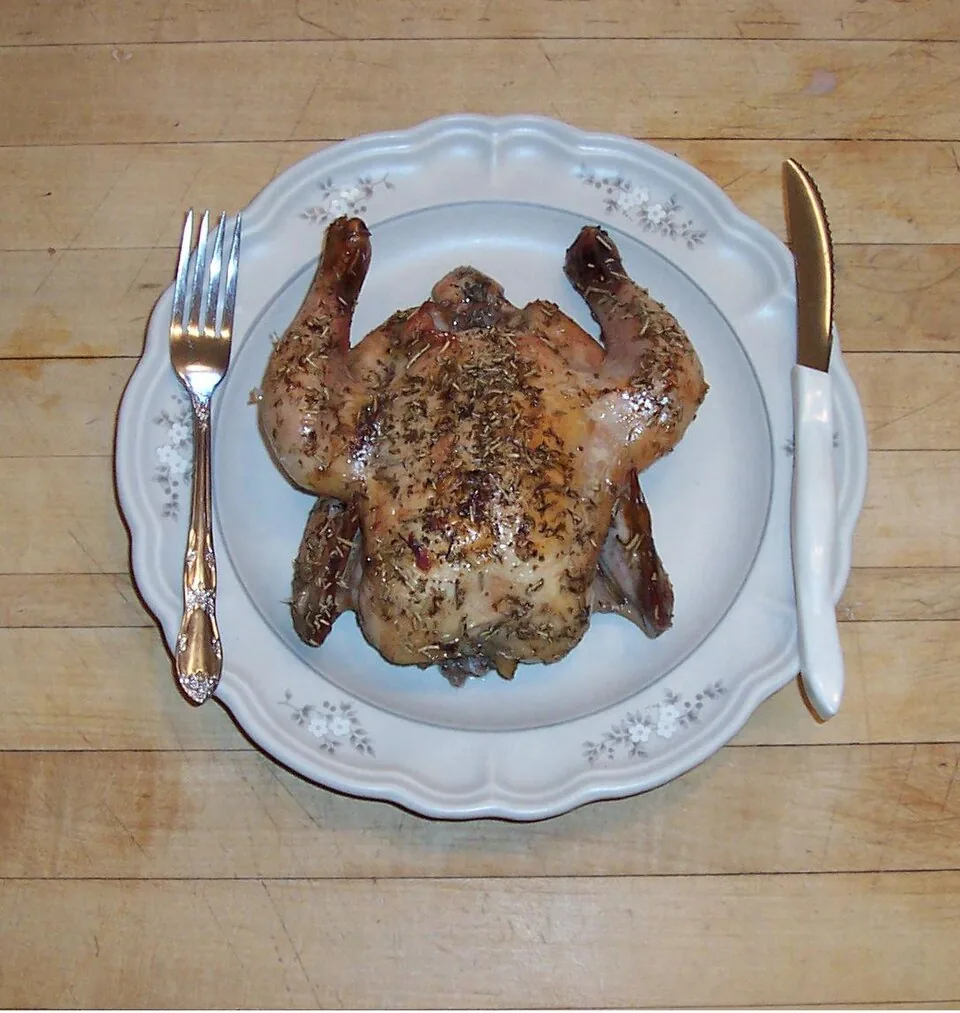
Glazed Cornish Hens
Roasted Cornish hens with apricot Dijon glaze, browned and glossy for individual Christmas servings.
Updated: Oct 6, 2026
Why you'll like it
- Ready in about 1 hour 15 minutes.
- Serves 4 — easy to halve or double.
- Medium level — everyday equipment only.
- Fits a busy weeknight.
- Storage, freezing and reheating covered below.
Glazed Cornish hens give each Christmas guest a whole bird, which feels festive while keeping portions simple to plan. Four hens of about 1.5 pounds each are patted dry, seasoned inside and out, and stuffed lightly with onion, lemon, and herbs.
Helpful guides
Instructions
Heat the oven to 400 degrees Fahrenheit and set a rack inside a large rimmed sheet pan. Remove giblets from the hens and pat every bird dry inside and out with paper towels. Drying well is the main step toward crisp browned skin.
Rub the hens all over with olive oil, then season cavities and skin evenly with salt, pepper, and garlic powder. Tuck lemon quarters, onion quarters, and thyme sprigs loosely into each cavity without packing tightly. Tie the legs together with kitchen twine for even cooking.
Arrange the hens breast side up on the rack with space between birds so hot air circulates. Roast 35 minutes without opening the oven so the skin sets and begins to brown. Meanwhile melt the butter and whisk with apricot preserves and Dijon in a small bowl.
Brush the glaze generously over the breast, thighs, and drumsticks of each hen. Return to the oven and roast 15 to 20 minutes more, brushing once halfway, until the coating turns glossy amber and thigh meat reads 165 degrees Fahrenheit.
Move the hens to a platter and rest 10 minutes so juices settle before carving or serving whole. Pour any pan juices into a small pitcher after skimming fat. Do not wash raw poultry; washing spreads bacteria across sinks and counters.
Serve one hen per person with wild rice, roasted carrots, and a spoonful of pan juices. Each serving has about 640 kilocalories. Refrigerate leftovers promptly and reheat until steaming and 165 degrees inside.
Troubleshooting — fixes, not repeats
- If the glaze darkens too fast, the preserves have high sugar; tent the hens with foil and finish roasting to 165 degrees. Apply a thinner second coat rather than one heavy layer.
- If hens differ in size, check the smallest first and remove each bird as its thigh reaches 165 degrees. Tent finished hens with foil while larger ones keep roasting.
- If the skin sticks to the rack, it was wet or the rack was ungreased. Pat birds fully dry and oil the rack well before roasting next time.
- If drippings smoke, add half a cup of water to the pan under the rack. The water catches fat without steaming the birds when the rack holds them above it.
Make it your way
- Serving with rice or naan: For a citrus herb version, replace apricot preserves with orange marmalade and add 1 teaspoon of grated orange zest to the glaze.
- For a savory version, skip the glaze and rub the skin with 2 tablespoons of softened butter mixed with rosemary and smoked paprika.
- Roast either style at 400 degrees to the same 165 degree finish.
- Serve with mashed potatoes and green beans to match the simpler coating.
Storage & reheating
Cool leftovers within 2 hours, then refrigerate in a covered container and use within 3 to 4 days. Reheat only the portion you will eat until steaming hot throughout — poultry and reheated rice should reach 165°F (74°C).
Reheat covered in a 350 degree oven with a spoonful of broth until steaming and 165 degrees inside.
Freeze for up to 3 months in freezer bags, then thaw overnight in the refrigerator before reheating.
FAQ
How do I thaw Cornish hens safely?
Thaw sealed hens in the refrigerator on a tray, allowing about one day for every 4 pounds. A 1.5 pound hen usually thaws within one day. Never thaw at room temperature; cold thawing keeps the surface below 40 degrees while the center softens.
Should I stuff the hens with dressing?
Use only small amounts of aromatic vegetables like onion and lemon in the cavity, not dense bread dressing. Bread packed inside a small bird may not reach a safe temperature. Bake dressing separately in a dish until its center reads 165 degrees.
Can I halve the hens before roasting?
Yes. Split thawed hens along the backbone and breastbone with kitchen shears for 8 half portions. Reduce the initial roast to 25 minutes, glaze, then roast 12 to 15 minutes more to 165 degrees. Halves cook faster and give crisper skin edges.