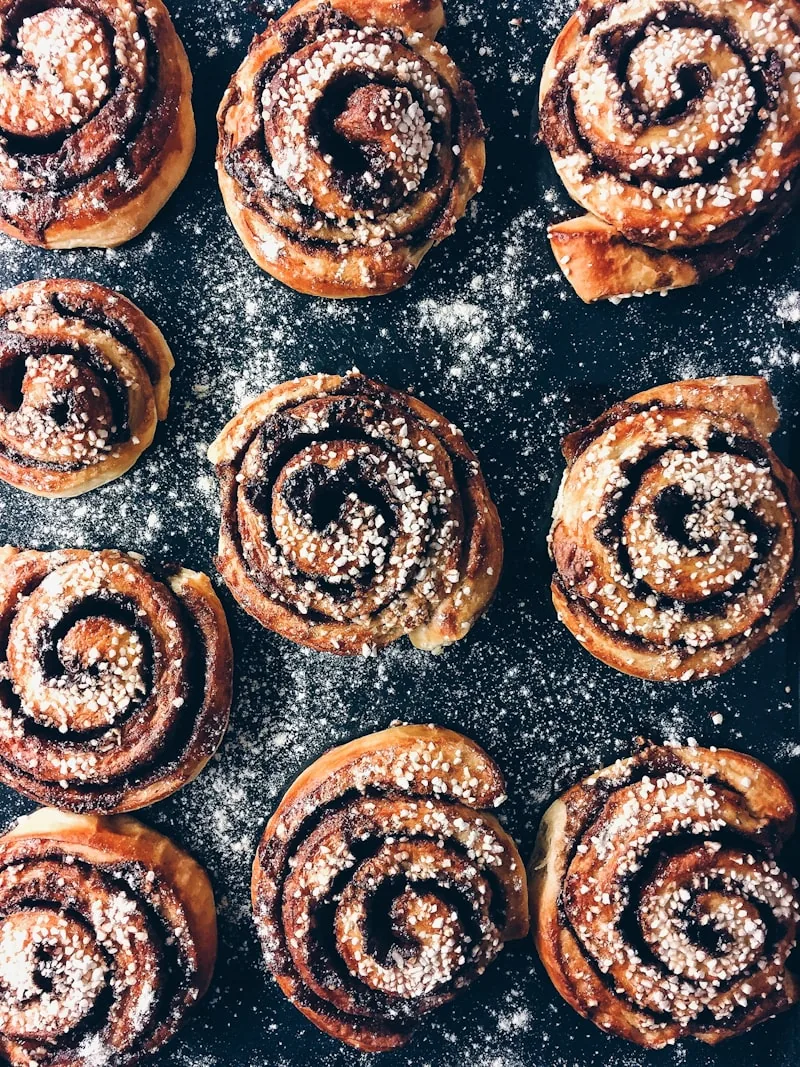
Cinnamon Rolls
Soft yeast rolls with cinnamon brown sugar filling and glaze, baked for weekend brunch and holidays.
Updated: Oct 6, 2026
Why you'll like it
- Ready in about 2 hr.
- Serves 12 — easy to halve or double.
- Medium level — everyday equipment only.
- Storage, freezing and reheating covered below.
Cinnamon rolls are a favored USA brunch bake, served warm with glaze for holidays, slow weekends, and bake sales. This recipe uses active dry yeast, warm milk, and butter for soft dough, with brown sugar and cinnamon filling rolled into 12 spirals.
Helpful guides
Instructions
Warm milk to about 110°F and stir in granulated sugar and yeast. Rest 5 minutes until foamy. If not foamy, yeast is inactive and needs replacement.
Add egg and 0.25 cup melted butter. Correct warmth activates yeast without killing it, supporting a light rise rather than dense, heavy rolls.
Mix in flour and salt gradually to form a soft dough, then knead 8 minutes until smooth and elastic. Place in a greased bowl, cover, and rise 1 hour until doubled. Proper kneading builds structure that traps air.
Underkneaded dough tears easily and bakes with coarse, uneven texture inside.
Roll risen dough on a floured surface to a 16 by 12-inch rectangle. Spread remaining softened butter, then sprinkle brown sugar and cinnamon evenly, leaving a 0.5-inch border. Even filling gives balanced spirals.
Press sugar lightly so it adheres and does not spill during rolling and slicing.
Roll tightly from the long side into a log and pinch the seam. Cut into 12 even slices with dental floss or a sharp knife. Place cut-side up in a greased 13 by 9-inch pan.
Cover and rise 30 minutes until puffy and touching. Tight rolling keeps centers intact.
Bake at 350°F for 22 to 28 minutes until golden on top and centers reach about 190°F. The middle roll should look set, not doughy. Tent with foil if tops brown early.
Full baking sets the swirl structure so slices hold shape when lifted warm from the pan.
Cool 10 minutes, then spread glaze made from powdered sugar, 2 tablespoons milk, and vanilla. Serve warm. Warm rolls absorb a thin glaze layer while remaining sliceable.
Return leftovers to cover promptly. Proper cooling before glazing prevents completely melted frosting pooling at the bottom.
Troubleshooting — fixes, not repeats
- If dough does not rise, milk was too hot or yeast expired. Keep milk near 110°F, check yeast date, and rise in a warm 75°F spot. Cold kitchens slow rising; place the bowl in an off oven with the light on. Give a full hour before judging progress.
- If rolls are dry, flour was heavy or baking ran long. Spoon flour into cups, bake 22 minutes at 350°F, and check centers. Overbaking firms the swirl quickly. Spread filling to edges and avoid adding extra flour during rolling beyond light dusting.
- If filling leaks, the log was rolled loosely or sliced with pressure. Roll tightly, pinch seams, and cut with floss to preserve spirals. Some butter pooling is normal; spoon it over warm rolls. Chill the log 10 minutes for cleaner cuts if needed.
- If centers stay doughy, the pan was crowded in a cool oven. Use a 13 by 9-inch pan, verify 350°F, and bake until the center roll looks set. Separate rolls slightly to test. Glass pans may need 2 extra minutes compared with metal pans for even centers.
Make it your way
- Add 0.5 cup raisins or chopped pecans over the cinnamon sugar before rolling for texture.
- For orange glaze, replace milk with orange juice and add 1 tsp zest.
- Bake in two 9-inch round pans for taller rolls, keeping the same 350°F time and dividing 6 rolls per pan.
Storage & reheating
Cool leftovers within 2 hours, then refrigerate in a covered container and use within 3 to 4 days. Reheat only the portion you will eat until steaming hot throughout — poultry and reheated rice should reach 165°F (74°C).
Freeze baked unfrosted rolls up to 2 months; thaw overnight in the refrigerator.
Reheat covered at 350°F for 10 minutes.
FAQ
Can I prepare rolls overnight?
Yes. After slicing into the pan, cover and refrigerate overnight. In the morning, rest at room temperature 45 minutes until puffy, then bake at 350°F as directed. This slow chill develops flavor. Add 2 minutes if still cool when entering the oven.
Can I use instant yeast?
Yes. Use the same amount of instant yeast and skip proofing; mix directly with flour, then add warm milk. Rise times shorten by about 15 minutes. Watch dough doubling rather than the clock, as kitchen warmth changes timing more than yeast type.
How do I get soft rolls?
Measure flour lightly, knead fully, allow both rises, and avoid overbaking at 350°F. Frost while warm and cover leftovers promptly. Placing rolls close together in the pan keeps sides soft. Reheat individual rolls 15 seconds in the microwave before serving.