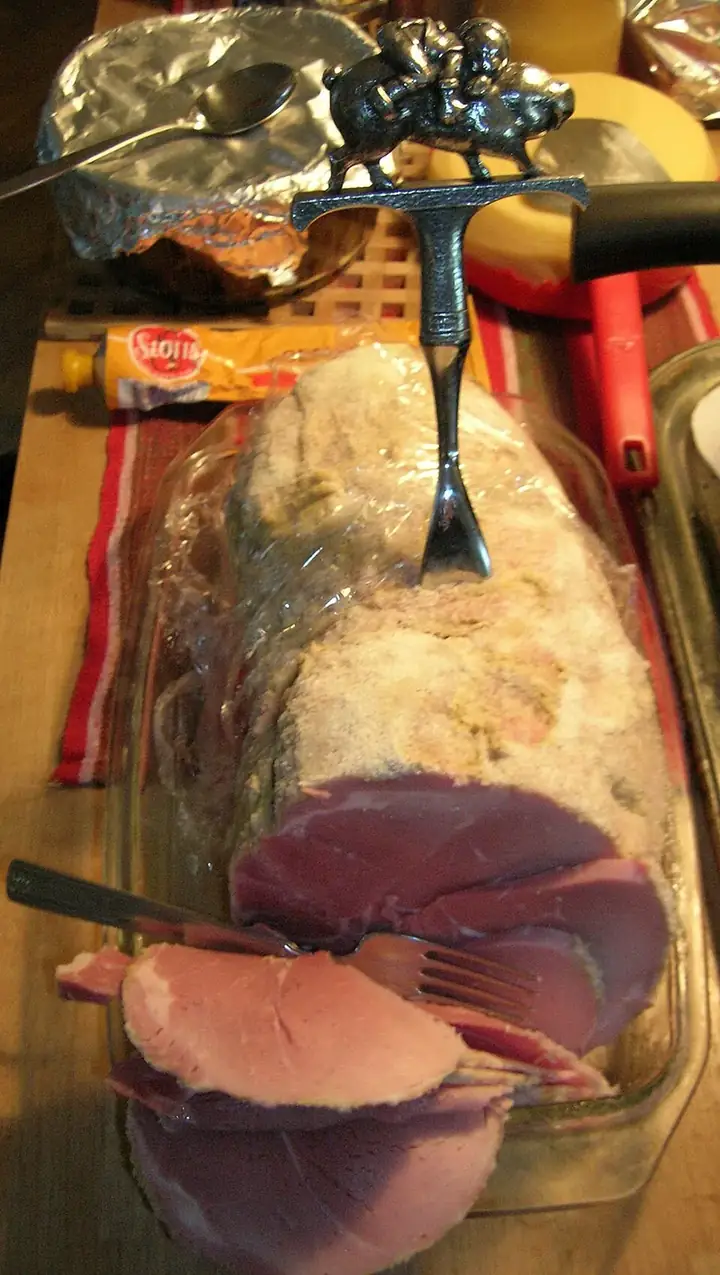
Christmas Ham
Juicy baked Christmas ham with brown sugar mustard glaze, scored and studded with cloves for the holiday table.
Updated: Nov 9, 2026
Why you'll like it
- Ready in about 3 hr.
- Serves 12 — easy to halve or double.
- Easy level — everyday equipment only.
- Storage, freezing and reheating covered below.
Christmas Ham takes about 3 hours and serves 12. A whole glazed ham anchors the holiday table with very little hands on work, since most of the time is unattended oven roasting.
Helpful guides
Instructions
Heat the oven to 325 degrees Fahrenheit and set a rack in a large roasting pan. Unwrap the ham and pat the surface dry with paper towels. Score the fat in a diamond pattern about 1/4 inch deep, cutting just through the fat without slicing into the meat.
Press one clove into the center of each diamond.
Stir the brown sugar, Dijon, honey, orange juice, and vinegar in a small bowl until it forms a thick spreadable glaze. The vinegar thins the mixture so it brushes evenly, while the sugar caramelizes in the oven. Set aside one third of the glaze for the final coat.
Place the ham cut side down in the pan and pour the water around it. Brush generously with glaze and tent loosely with foil. Roast about 2 hours, brushing with more glaze every 30 minutes.
The foil prevents the outside from darkening before the center warms through.
Remove the foil for the last 30 to 40 minutes and brush with the reserved glaze. Roast until the surface turns deep amber and a thermometer in the thickest part reads 140 degrees Fahrenheit. If the glaze darkens too fast, tent the top again and continue until warmed through.
Transfer to a carving board and rest 20 minutes so juices settle. Pull out the cloves or leave a few for looks, then carve thin slices around the bone. Serve warm with pan juices spooned over.
Do not wash the ham; washing spreads bacteria to sinks and counters.
Troubleshooting — fixes, not repeats
- If the glaze slides off, the ham surface was wet; pat it very dry and chill 15 minutes before glazing so the coating clings.
- If the outside browns before the center warms, tent with foil and keep roasting until the thermometer reads 140 degrees inside.
- If you buy a spiral sliced ham, reduce roasting time by 30 minutes and brush glaze between the slices so flavor reaches every layer.
Make it your way
- Spicier version: For a spicy version, stir 1 teaspoon of chili powder and 1/2 teaspoon of ground ginger into the glaze.
- For a pineapple version, arrange canned pineapple rings over the ham with toothpicks during the last 40 minutes and add 1/4 cup of pineapple juice to the glaze.
- Serve either style with roasted sweet potatoes and green salad.
- Keep the same 325 degree oven, glazing rhythm, and 140 degree finish so the meat stays juicy.
Storage & reheating
Cool leftovers within 2 hours, then refrigerate in a covered container and use within 3 to 4 days. Reheat only the portion you will eat until steaming hot throughout — poultry and reheated rice should reach 165°F (74°C).
Reheat slices gently in a covered skillet with a spoonful of water until steaming.
Freeze tightly wrapped portions for up to 2 months, then thaw overnight in the refrigerator.
FAQ
What temperature should ham reach?
Fully cooked ham only needs reheating to 140 degrees Fahrenheit in the thickest part. Use an instant read thermometer away from the bone. Fresh uncooked ham is different and must reach 145 degrees with a 3 minute rest, so check the label before you start.
Should I glaze at the start?
Brush a thin base coat at the start, then add more layers during roasting and a final coat near the end. Sugary glaze burns over long cooking, so foil cover for the first two thirds builds flavor without scorching. The last uncovered stretch sets the sticky shine.
How do I carve around the bone?
Set the ham on its side and slice perpendicular to the bone in even pieces, then cut along the bone to release them. A long sharp carving knife beats a serrated one for smooth slices. Save irregular end pieces for dicing into soups, salads, and omelets.